Architecture
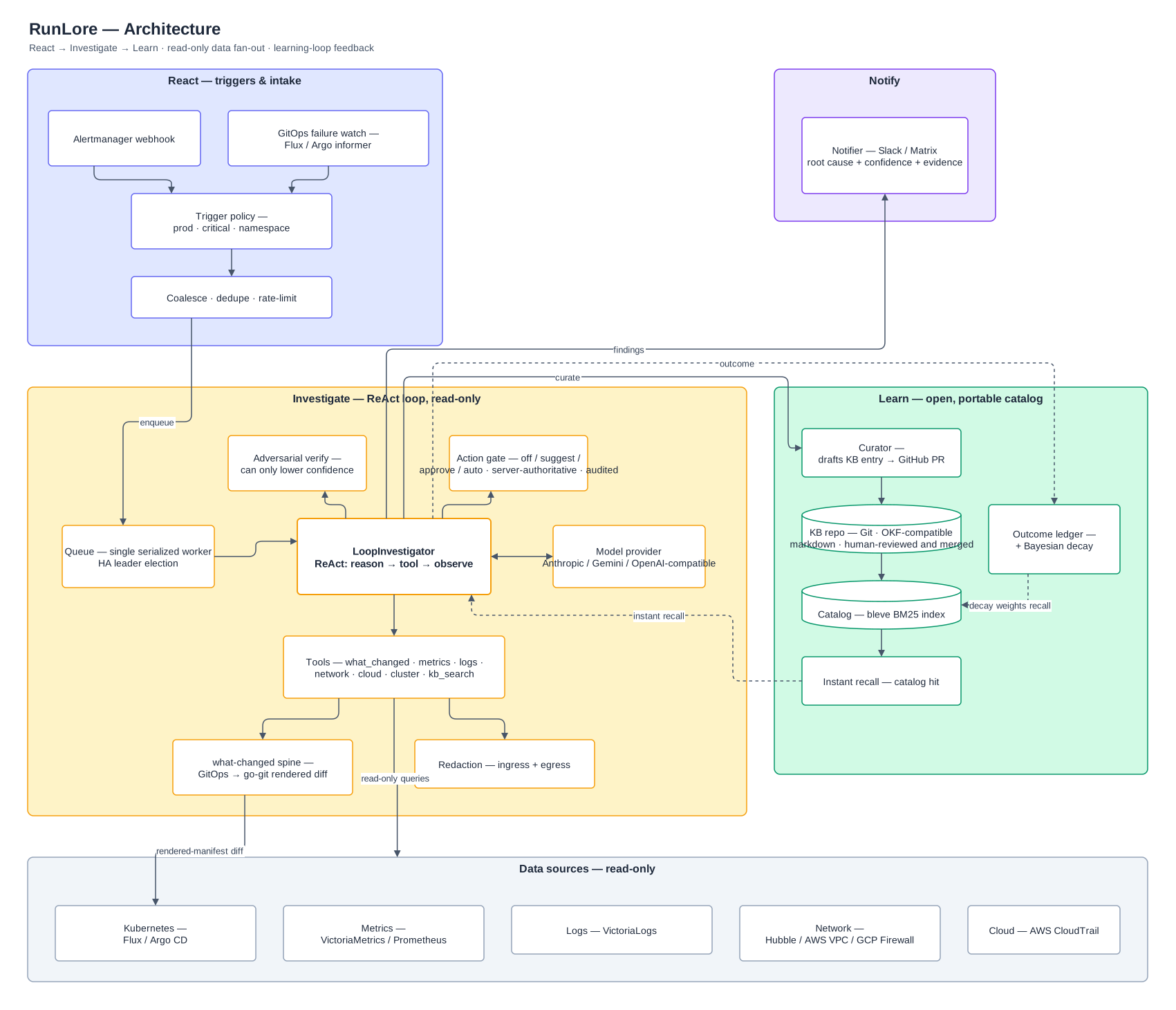
The detailed architecture as the React → Investigate → Learn flow, with the read-only data-source fan-out and the learning-loop feedback. (The README’s “How it works” diagram is the one-glance summary; this is the source-of-truth detail.)
Reading it
- React — an Alertmanager alert or a GitOps-failure event passes the trigger policy, is coalesced / deduped / rate-limited, and enqueued.
- Investigate — a single serialized worker (HA leader-elected) runs the ReAct loop: the model drives read-only tools; the what-changed spine diffs the exact GitOps revisions Flux/Argo reconciled; findings are adversarially verified, secrets are redacted in and out, and any proposed action passes the server-authoritative gate (with a hash-chained audit log).
- Learn — the curator opens a KB pull request; once a human merges it, the catalog re-indexes and feeds instant recall back into the loop, while the outcome ledger’s decay weights future recall.
Extensibility — adding a source or a notifier
Event sources and chat notifiers are pluggable through two symmetric registries. The core owns
the cross-cutting machinery; an adapter supplies only the semantic bit and self-registers — no edits to
cmd/lore/main.go wiring and no edits to the central config.Config struct.
- A source is a Go package under
internal/source/<name>/that implements one of two interfaces and callssource.Registerin itsinit():WebhookSource(push) —Decode(body, header) → ([]Request, resolutions). The core provides the HTTP transport (auth, body-cap, routing) and mounts it at the descriptor’sPath.WatcherSource(pull) —Watch(ctx) → <-chan Request. The core runs it and applies dedup/debounce. Everything an adapter produces is the normalizedinvestigate.Request; the shared ingest pipeline (trigger policy · dedup · coalesce · rate-limit) and the enqueue path are identical for every source. The adapter reads its own config fromDeps.Raw[<name>](thesources.<name>:block). Wire it with a single blank import inmain.
- A notifier is a package under
internal/notify/<name>/implementingproviders.Notifier.Deliver, registered vianotify.Register; built-ins (Slack, Matrix) read typed config, others readnotify.<name>from theNotify.Extramap.internal/notify/webhook(a generic outgoing-webhook sink) is the reference example: it is one self-registering file plus one blank import — zero changes to central config.
Why typed adapters, not a generic CloudEvents envelope: RunLore is a terminal investigator, not a node in an event mesh. The value at intake is extracting a good investigation seed (workload, symptom, change-anchor), which a generic envelope does not help with — so each source gets a small typed adapter. A CloudEvents ingress could later be one such adapter (for Argo Events / Knative shops), never the core.